


Water safety isn’t just a precaution — it’s a life skill. The earlier children learn how to be safe around water, the better. Especially in places like Florida, being around pools and water is part of everyday life, and kids need real skills to stay safe.
Swim lessons are important, but safety starts even before lessons begin. When children are introduced to water in a calm and predictable way, they build confidence faster and learn skills that actually stick.
In this post, you’ll learn:
-
Why early water exposure matters
-
How swim skills reduce drowning risk
-
Simple ways to help your child feel safe in the water
The goal is to help parents create a safe environment while raising confident swimmers — so time around the water can be both fun and safe.
Simple Water Safety Steps for Parents
Water safety doesn’t have to be complicated. A few simple habits make a big difference.
Know your environment Make sure the area around the pool is safe and easy to supervise. Always know the depth and where your child can safely stand or reach the wall.
Set clear rules Teach simple rules like no running near the pool and always asking before getting in.
Stay within reach Young children should always be within arm’s reach, even if they are learning to swim.
Practice skills regularly Kids build confidence through repetition. Short, consistent practice helps skills stick.
Why Swim Lessons Matter
Swim lessons do more than teach kids how to move in the water — they teach life-saving skills.
Children who learn early tend to be more comfortable and confident in the water. They learn how to float, find the wall, and stay calm if they fall in.
Swimming also builds strength, coordination, and confidence — but the biggest benefit is safety.
Real progress happens when children understand what they are doing and feel capable in the water.
Skills first. Confidence follows.
Common Water Safety Myths
There’s a lot of confusion about water safety. Here are a few things parents should know:
Swimming lessons alone don't make a child water safe. Skills need practice and supervision is always important.
Floaties are not safety devices. They can give kids a false sense of confidence.
Fences and alarms help — but they’re only one layer of protection.
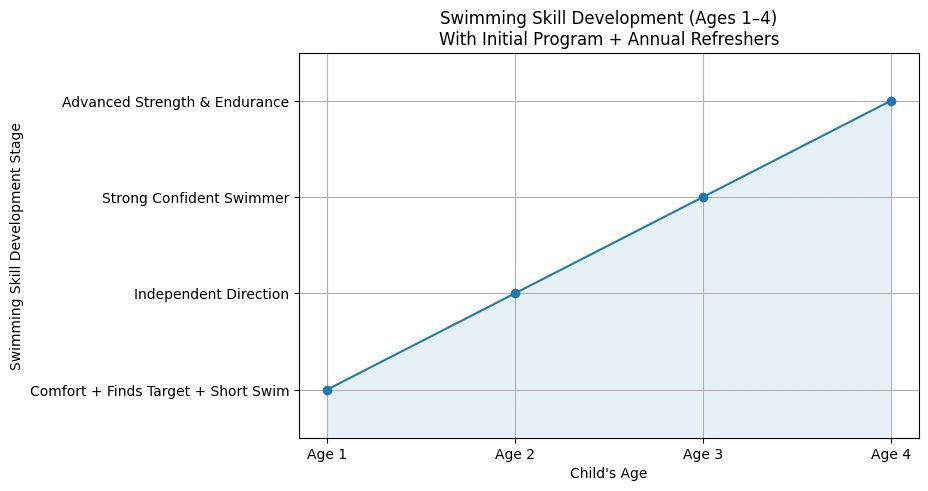
One lesson or one season isn't enough. Skills build over time.
 Edit Image
Even good swimmers need supervision.
Water safety works best when you combine layers of protection — supervision, barriers, and skills.
What Kids Should Learn First
Young swimmers should focus on a few basic skills:
-
Being comfortable in the water
-
Learning to take a breath
-
Learning to hold onto the wall
-
Staying calm
-
Where to get air when they need it
-
Knowing how to swim from point A to point B
-
Knowing how to float to rest and relax, or if they are unable to get the wall or steps to get air.
These simple skills are the foundation for everything else.
Final Thoughts
Every parent wants their child to be safe around the water. The best way to do that is by building skills early and practicing consistently.
You don’t need to rush the process — steady progress builds real confidence.
When kids understand what to do in the water, fear goes down and confidence grows.
And confident swimmers are safer swimmers.

Water safety starts long before swim lessons begin.
If you want to help your child feel comfortable and confident in the water, start with my step-by-step parent guide.
After teaching 1000's of children and multiple instructors, I created the most simple 10 day plan for parents to follow so they can be successful in the water teaching their little one's to swim as well.

